Teaching
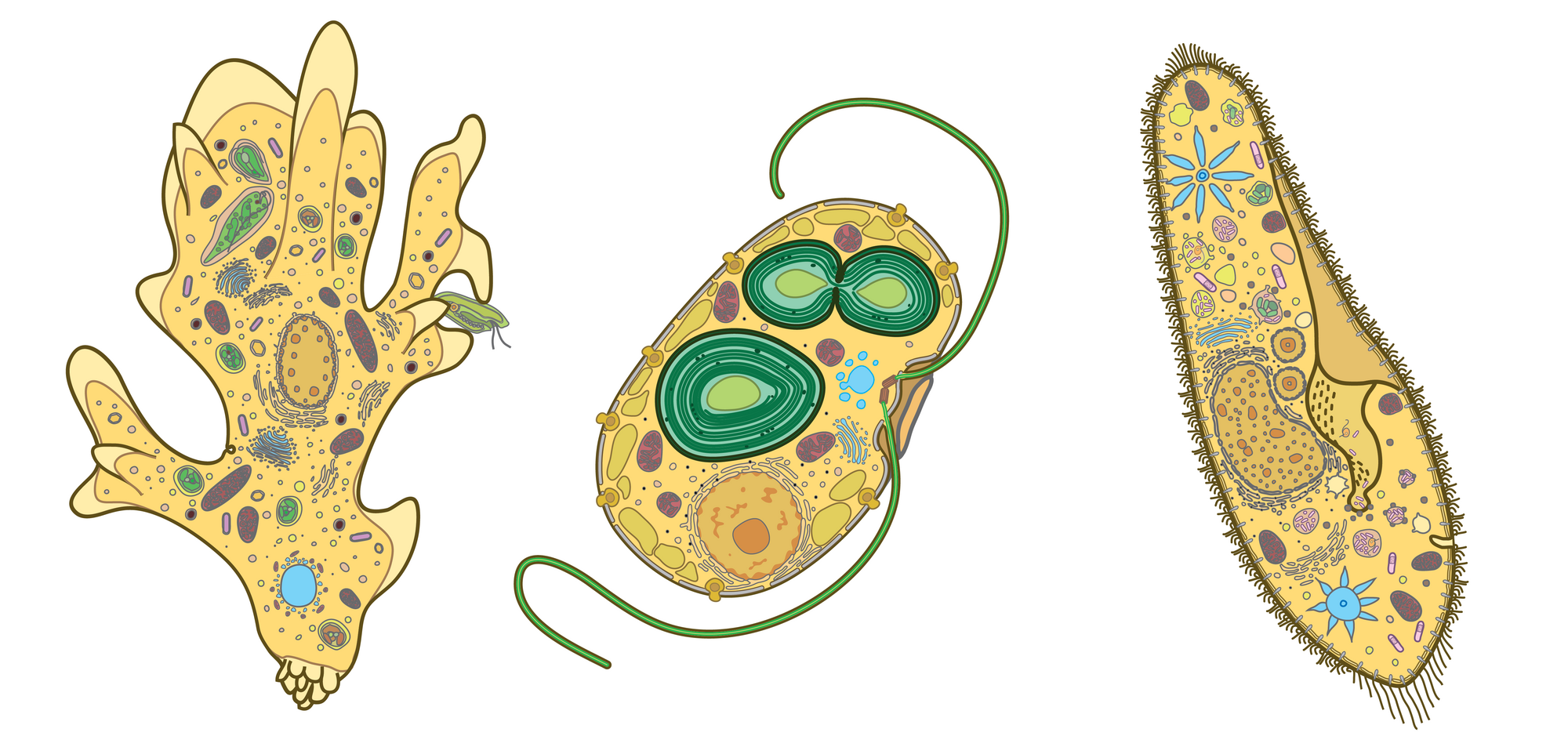
Drawings by Yana Eglit, from Eglit et al. 2023.
Cell biology is usually taught as a set of facts about animals and yeast. Most of the diversity is elsewhere.
Evolutionary Cell Biology
Colby College, developed in 2023.
The cell is the smallest structural and functional unit of life. This course explores the evolution of cells through the lens of eukaryotic diversity, which is mostly microbial. We cover the origin and evolution of eukaryotic cells, endosymbiotic theory, cell organization, eukaryotic genomes, and the ecology of eukaryotes. Students also learn how new microeukaryotes are found and described, using microscopy and molecular methods, along with basic bioinformatics.
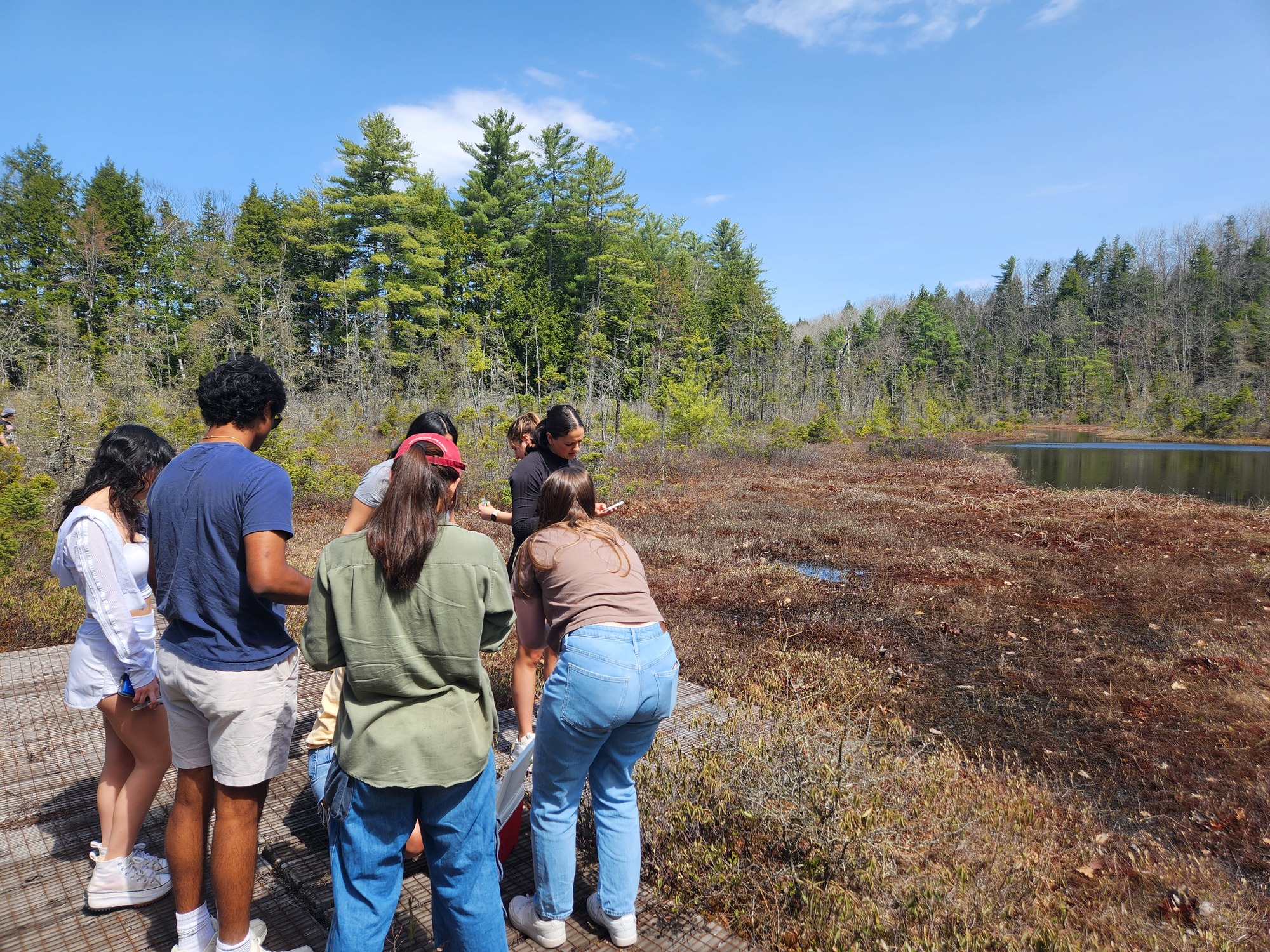
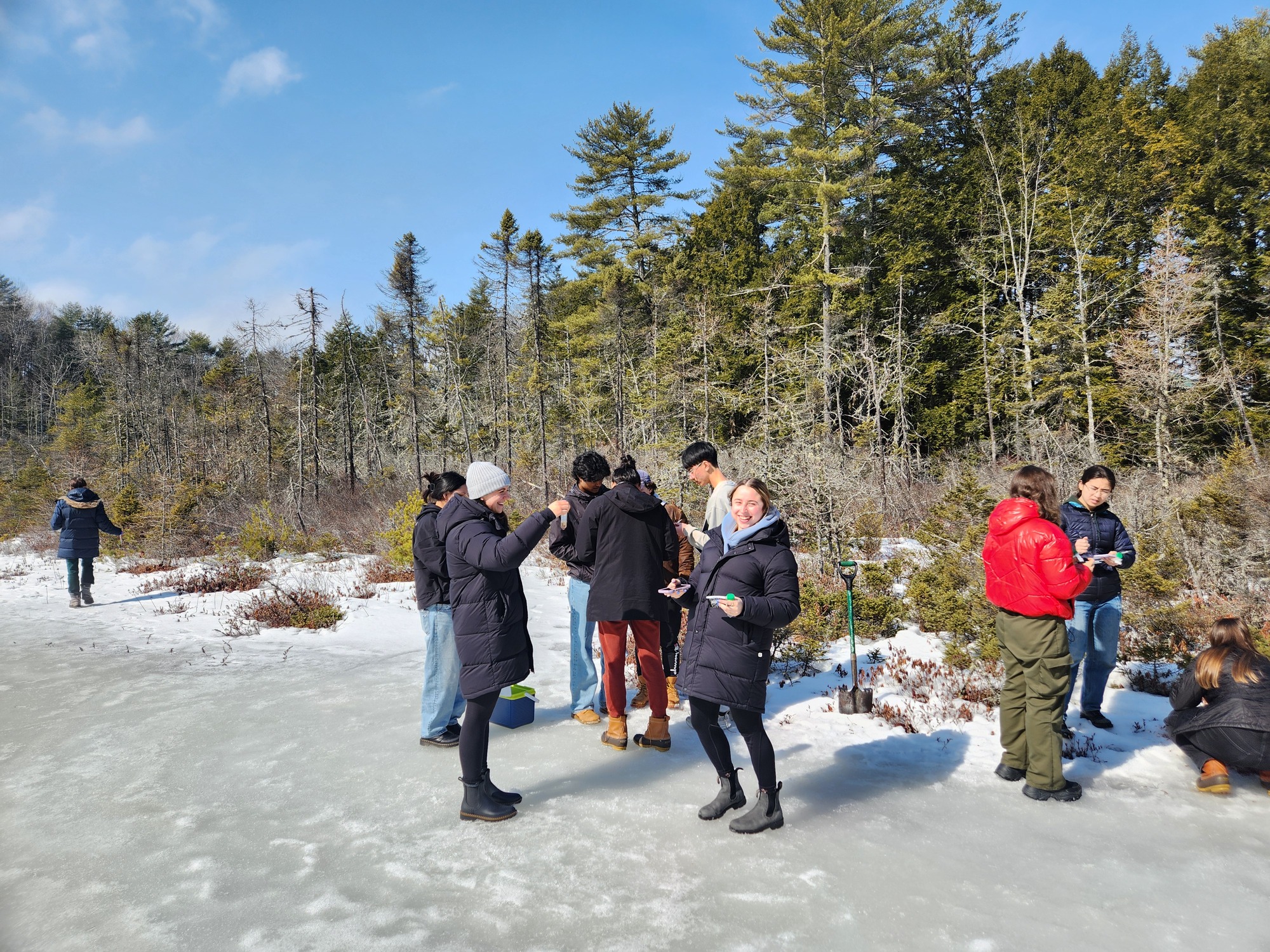
The course fulfills the field requirement for the biology major. We go out during class time and collect from bogs, lakes, streams, ponds, and soils, then identify what we find by microscopy and sequence it.
How I teach
“Mean people suck.”

The class was part of a course in eighteenth- and nineteenth-century Russian literature. The professor, an impish woman with a high-pitched voice, had read the phrase on a bumper sticker that week and came in ready to challenge us on what made it effective.
“Two long vowels followed by a short one that sounds like a shot!”
We had all seen the bumper sticker before and most had never given it a first, let alone second or third thought. The class was part of a course in 18th and 19th century Russian literature. In the class, the boorish statement, “mean people suck” morphed into an example of modern poetry and how a variety of meanings can be conveyed in a short seemingly direct sentence. Science teaching can do the same thing.
Two ways I try. Every fact has a history, and saying so connects the work to the people who did it. When I teach the salamander-alga symbiosis I start with Henry Orr’s 1888 note that the eggs “seem to present a remarkable case of symbiosis” and the fact that his first question, how the algae get into the eggs, is still open. Primary literature belongs in the classroom, at whatever level the course allows. A 1938 genetics paper carries experimental design, methods, and a negative result, which is more than a textbook chapter can show about how science actually proceeds.
I also bring my current research in, which keeps me engaged in what I am teaching and keeps students close to work that is ongoing. In an introductory course that means posing the question and stopping there: we study a green alga that lives inside a salamander, the only case of its kind in a vertebrate. Based on what you know about cells, how would you find out what is going on? In an advanced course it means giving them the background and having them work out the questions and approach themselves.
My students have gone on to PhD programs, medical school, professional work, and to art and business school. Whatever else a course covers, they should leave it better at writing, at reading critically, and at explaining something to a room. Those carry down all of those paths.