Endogenous viral elements in green algae
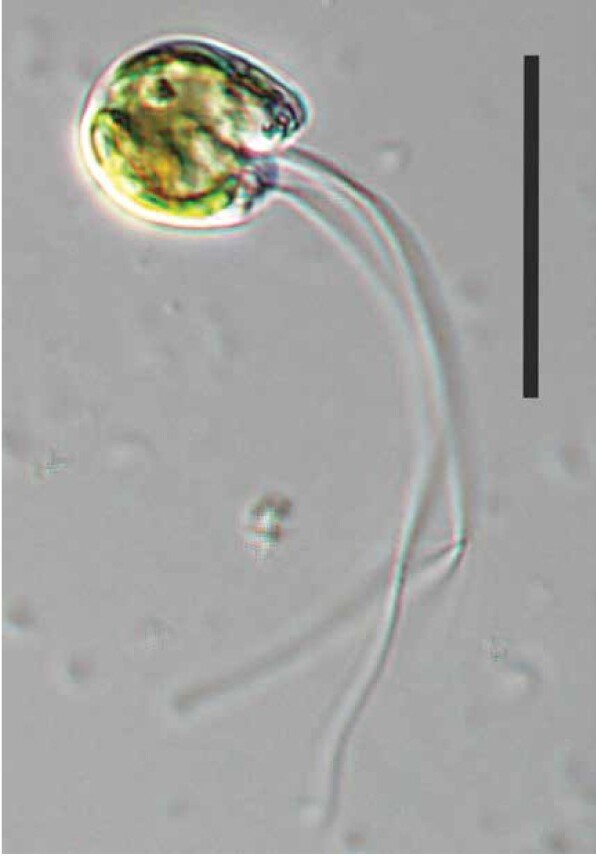
Green algal genomes carry the remains of past viral infections. In Cymbomonas tetramitiformis there are a great many of them, and we do not yet know how they interact with the algal cell.
The problem
Cymbomonas tetramitiformis is an early diverging green alga that feeds both ways: it photosynthesizes and it eats bacteria. In 2015 we published an initial genome assembly built from short reads, which was the standard approach then and the reason a large part of the genome was missing. Short-read assemblies collapse repeats, and repeats are where integrated viral sequence tends to sit.
What we found
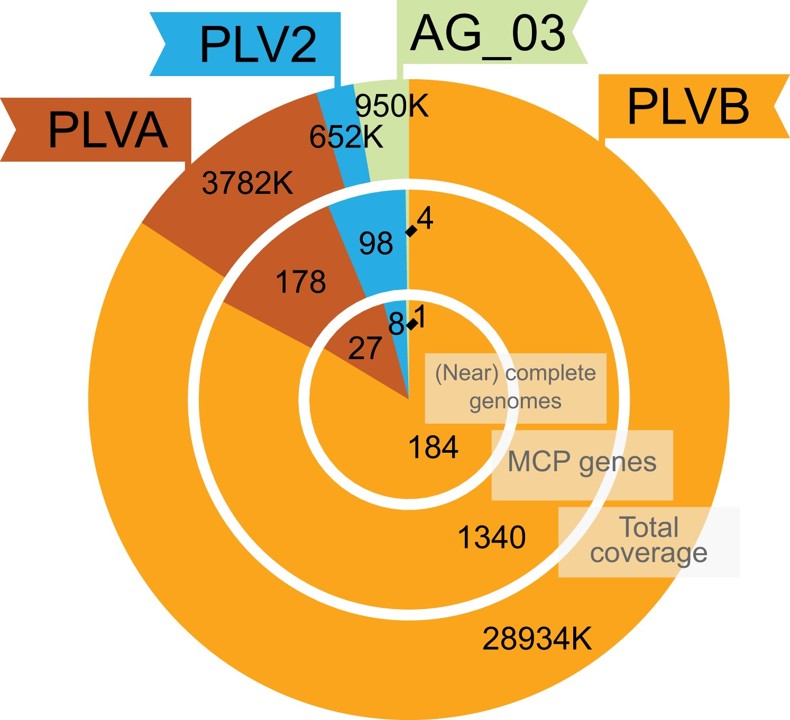
A new hybrid assembly using Oxford Nanopore long reads together with Illumina data improved both the size and the contiguity of the genome, and the repeat regions that came back with it were full of viruses.
Among them: the complete 400 kb genome of a giant Algavirales virus, the first record of the uncultured viral family AG_03 in a green alga. Many integrated Polinton-like viruses, 15 to 25 kb each, falling into two groups, one of them new and specific to prasinophytes. And repeat elements carrying heliorhodopsin genes that appear to be of mirusvirus origin.
Taken together that is a record of repeated, and possibly continuing, interaction between this alga and the viruses that infect it, written into the genome.
Where it stands
We are working on what the viral elements mean for the alga.
Collaborators
- Eunsoo Kim, Ewha Womans University.
- Xyrus Maurer-Alcalá, William & Mary.
Support
Current Support

Microscopic and genetic investigation into the endogenous viral elements in green algae National Research Foundation of Korea. 2025 to 2028.
Prior Support

Prior suport for this project was provided to Eunsoo Kim through NSF award IOS-1453639