Predicting cell biology from genomes
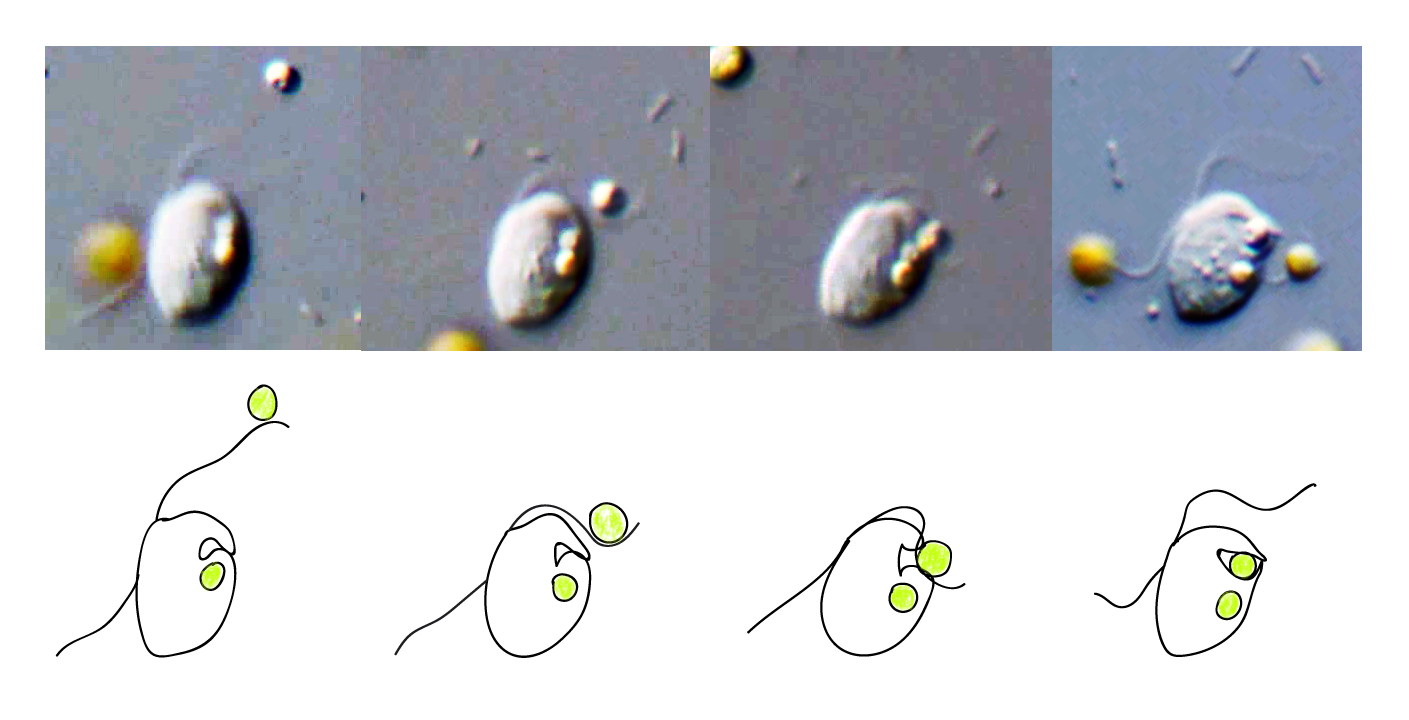
For lineages known only from sequence, inferring how the cell lives from what its genome encodes.
The problem
How does the information coded in an organism’s DNA relate to what that organism does? The question is old and the general answer is hard. But a narrower version is tractable: rather than tracing individual genes to individual functions, look at patterns of gene presence and absence across the whole tree of life, sampled evenly, and ask which combinations travel together.
Supervised clustering on those patterns defines sets of genes that link distant organisms to a shared function. An organism you have never observed feeding can then be scored on whether it has the genomic equipment to feed.
The approach
Functional mapping of genome-scale data
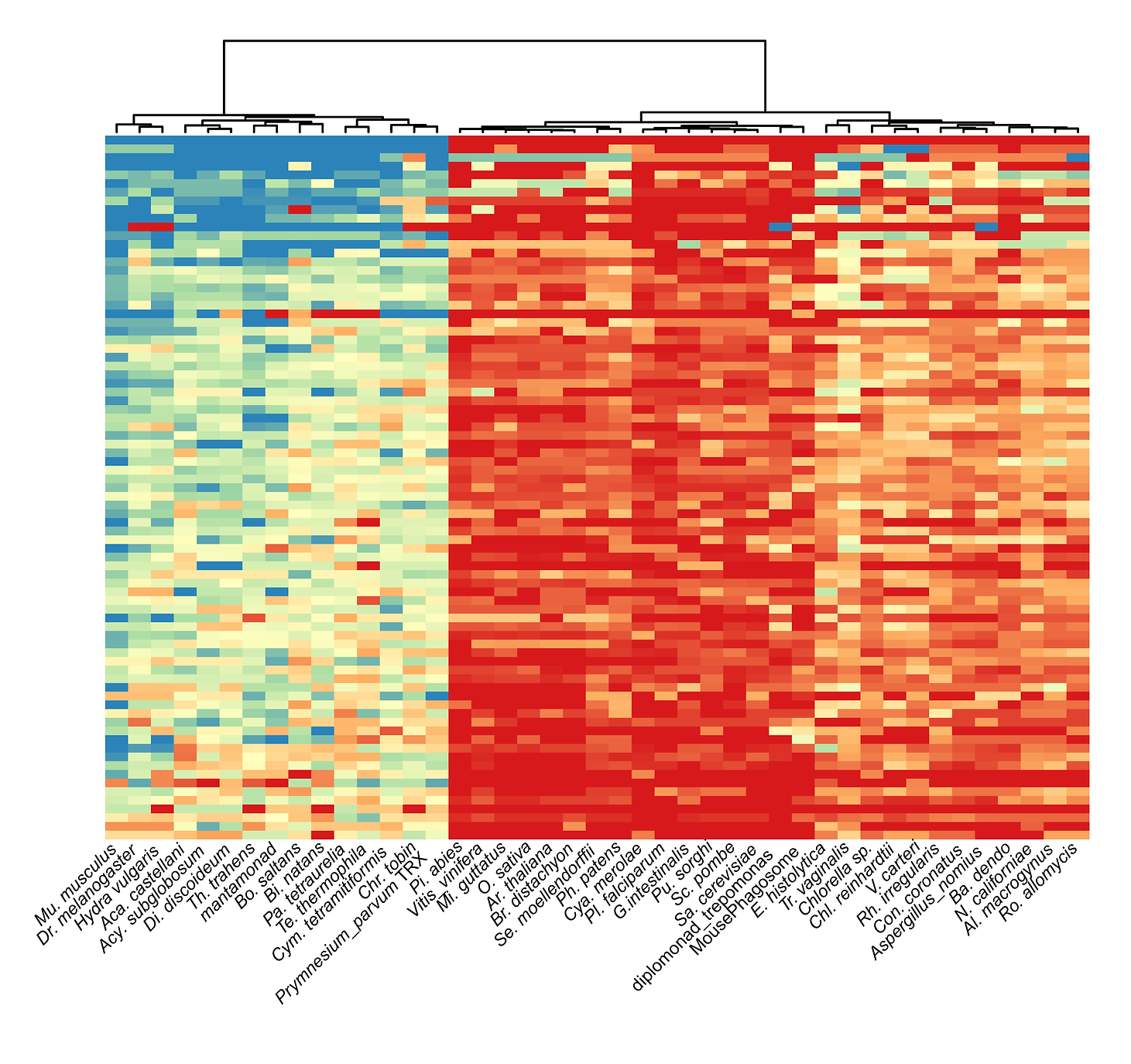
Each row is a cluster of proteins acting in a similar functional process. Each column is an organism. The colors are a weighted score for how many proteins that organism has in that process. Machine learning inference on patterns like these is what produces a prediction.
Principal component analysis of functional maps
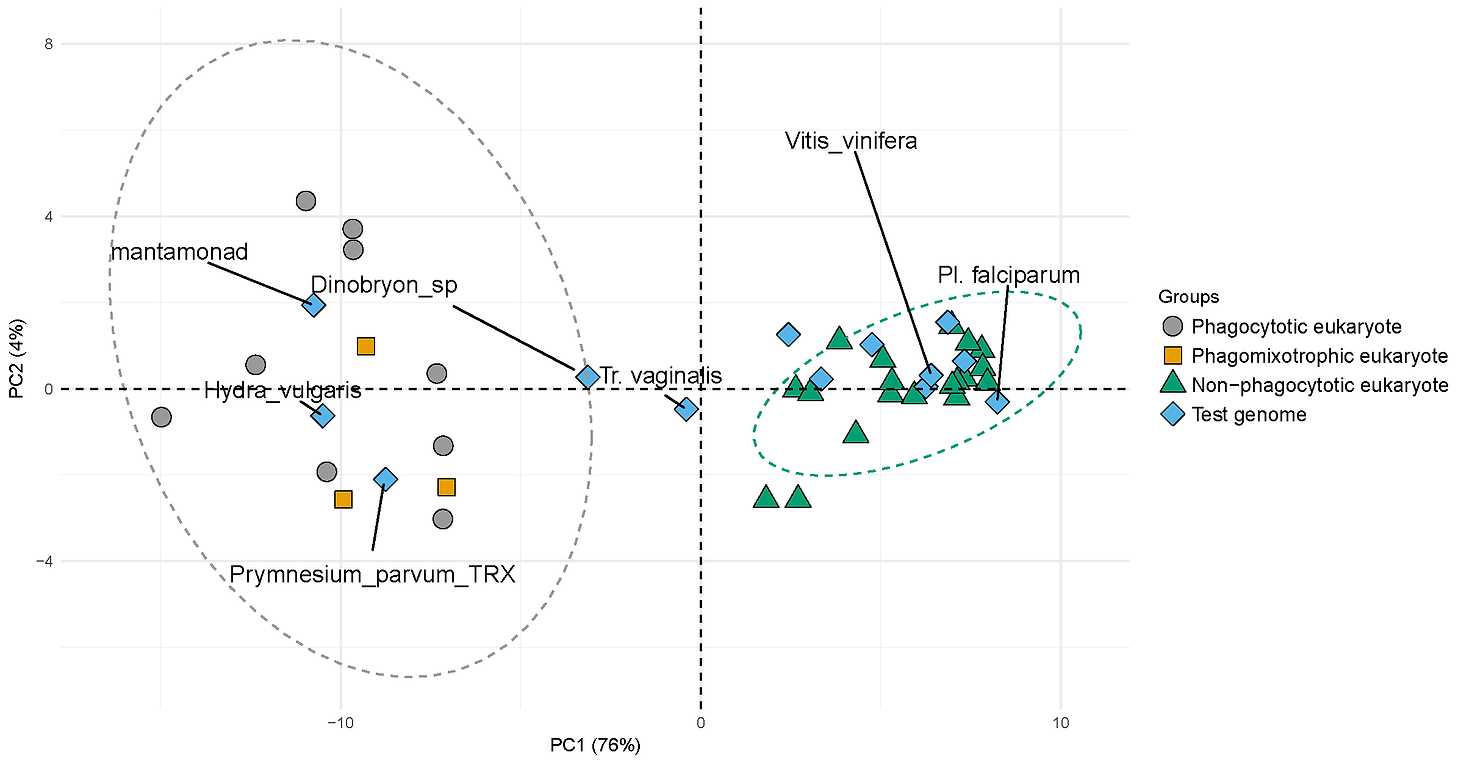
The same data reduced to principal components separates organisms into clusters by functional capacity, which is easier to read than the full matrix and shows the same structure.
What we found
Multiple origins of the genes predictive of phagocytosis
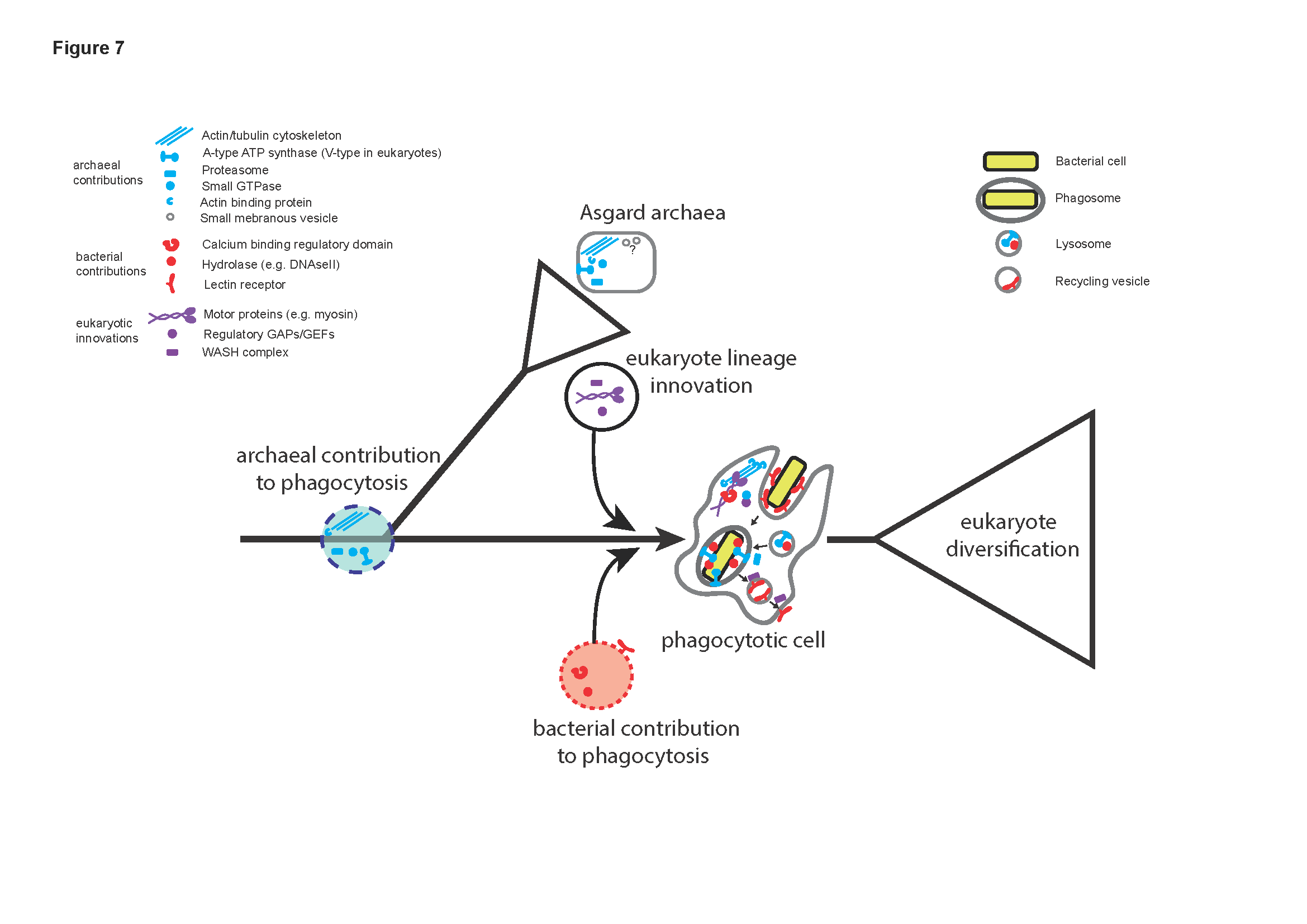
The genes that predict phagocytosis in eukaryotes do not share a single evolutionary origin. They come from archaea, from bacteria, and from apparent innovation within the eukaryote lineage. Searching across diversity is what linked cell eating to its prokaryotic roots.
Where it stands
The computational tool Predict Trophic Mode came out of this project. Future work will update the predictive framework with modern machine learning algorithms and an expanded comparative genomic catalog.
People
John A. Burns, Bigelow Laboratory for Ocean Sciences.
This work began at the American Museum of Natural History, with Alexandros Pittis, now at the Institute of Molecular Biology and Biotechnology, FORTH, and Eunsoo Kim, now at Ewha Womans University.
Support
Current Support
We are currently seeking support for this line of research.
Prior Support

The Simons Foundation supported this work through award SF-382790.