The Plagiacantha Genome Project
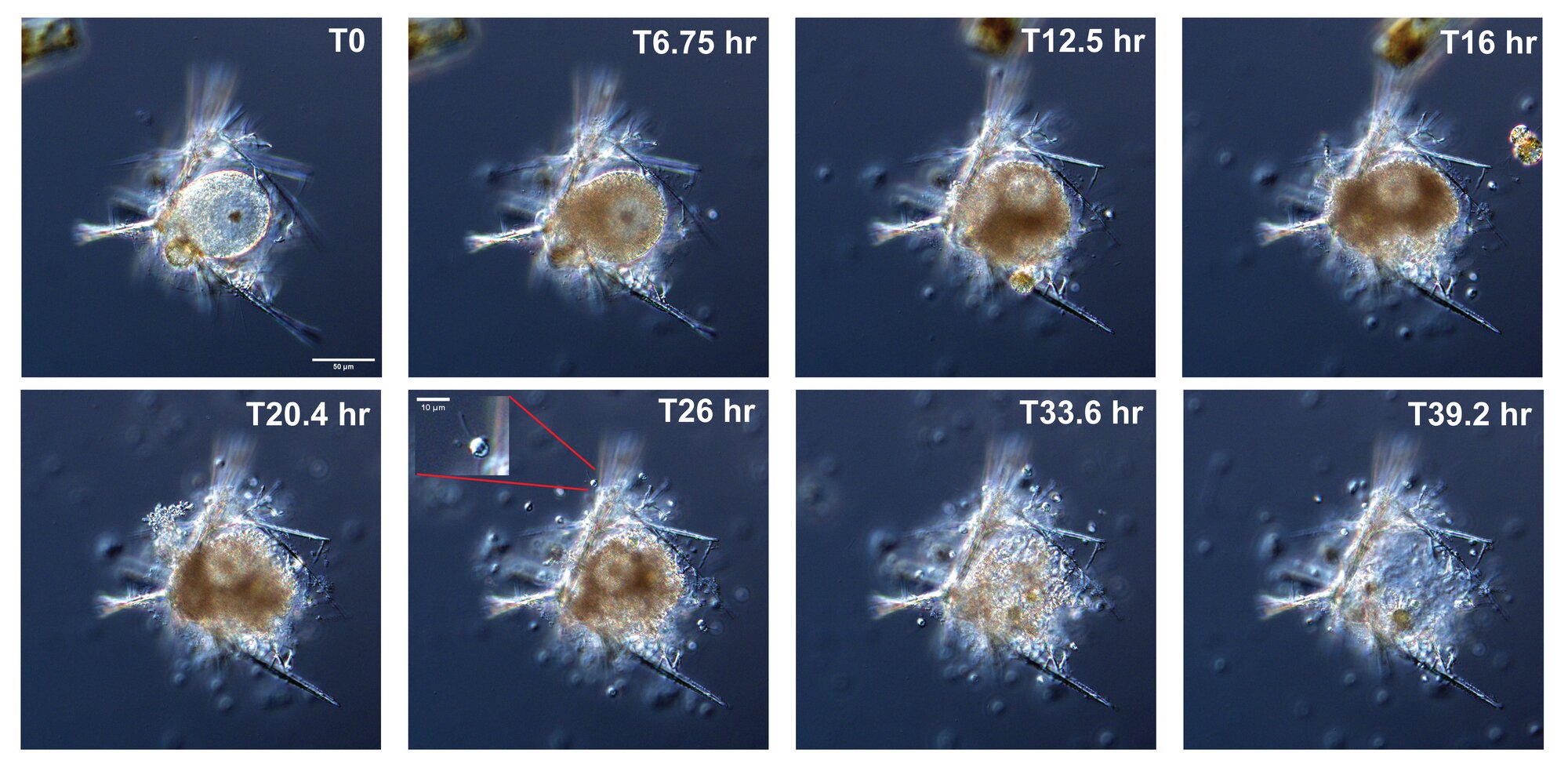
A community effort to sequence the first radiolarian genome and establish Plagiacantha sp. as a model system.
Why this species
Radiolarian biology has been largely opportunistic. With no culturable model species, most of what is known comes from encounters rather than experiments.
Over the past five years we have worked Plagiacantha sp. into something tractable: its life stages, bloom cycle, and feeding behavior are documented. On the molecular side we have a preliminary transcriptome, a partial single-cell amplified genome, and genome size estimates, and we have developed cell biological methods including microinjection. No other radiolarian has been characterized in this much detail.
Four things about the organism make it suitable.
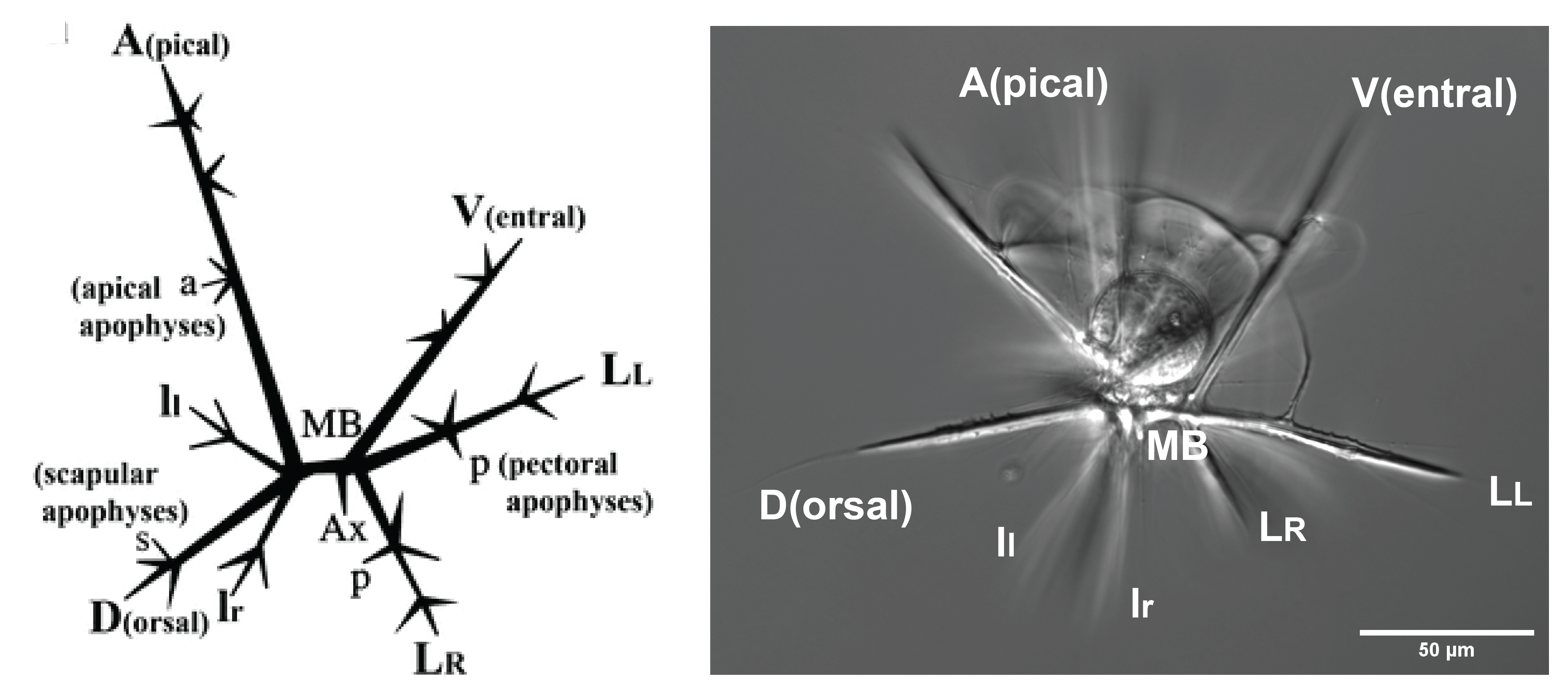
No photosymbionts. Many radiolarians host dinoflagellate symbionts. Plagiacantha does not, which simplifies both sequencing and cultivation.
An open skeleton. Biomineralization is what makes radiolarians useful as fossil indicators, but a solid skeleton hides the cell. This one is open enough to watch the central capsule through the whole life cycle.
Visible structure. The body plan is relatively simple, but the characteristic radiolarian features are there and observable: long axopodia, and the podoconus, the cone of axopodia that nassellarians form.
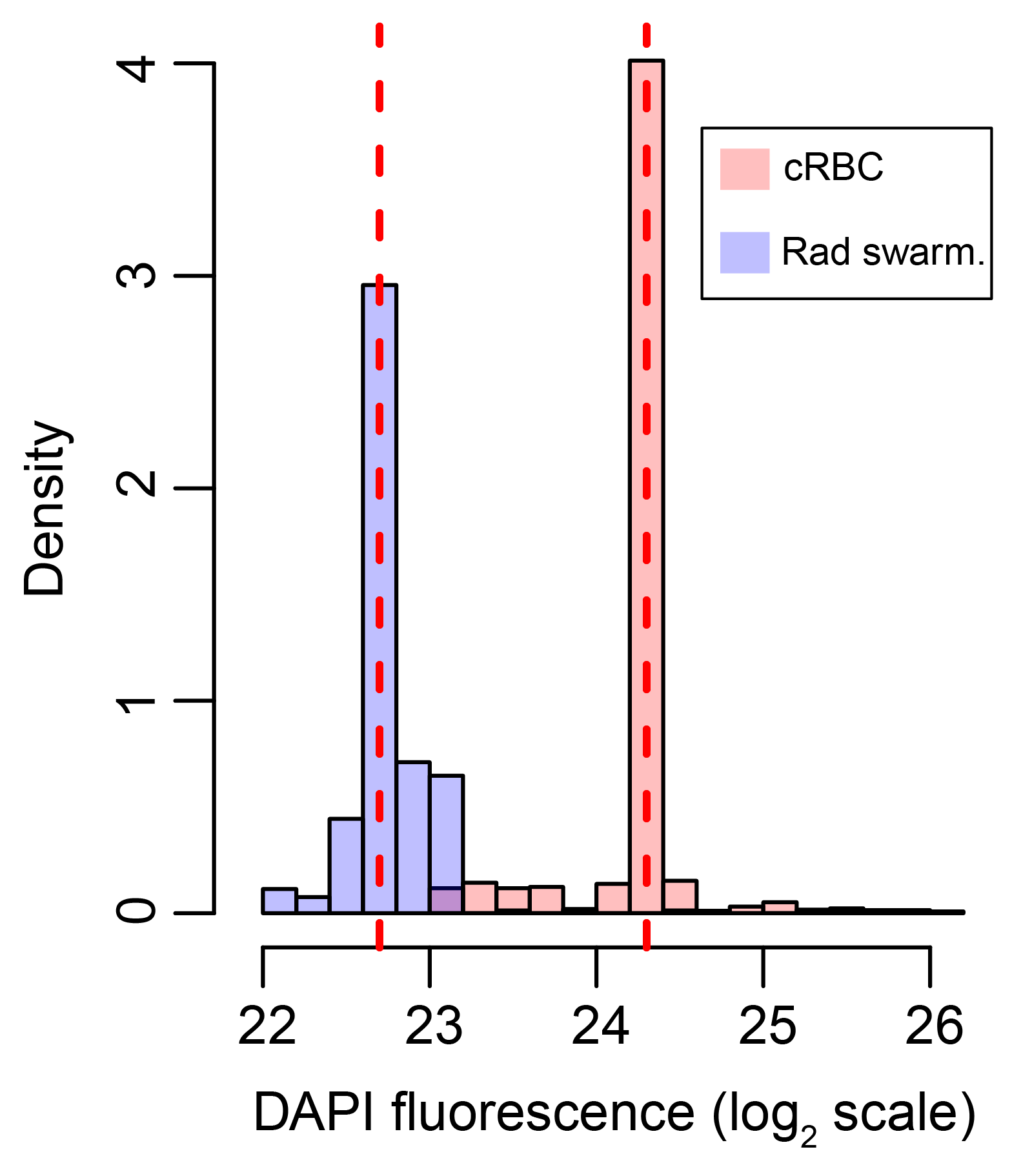
A manageable genome. Flow cytometry on swarmer cells puts it around 806 million base pairs. Some radiolarians are estimated above 10 billion, which puts a high-quality assembly out of reach. This one is within it.
Tracking the bloom
The Plagiacantha sp. life cycle follows a predictable schedule, which is what makes the whole project possible. We sample through the bloom and post the counts as they come in.
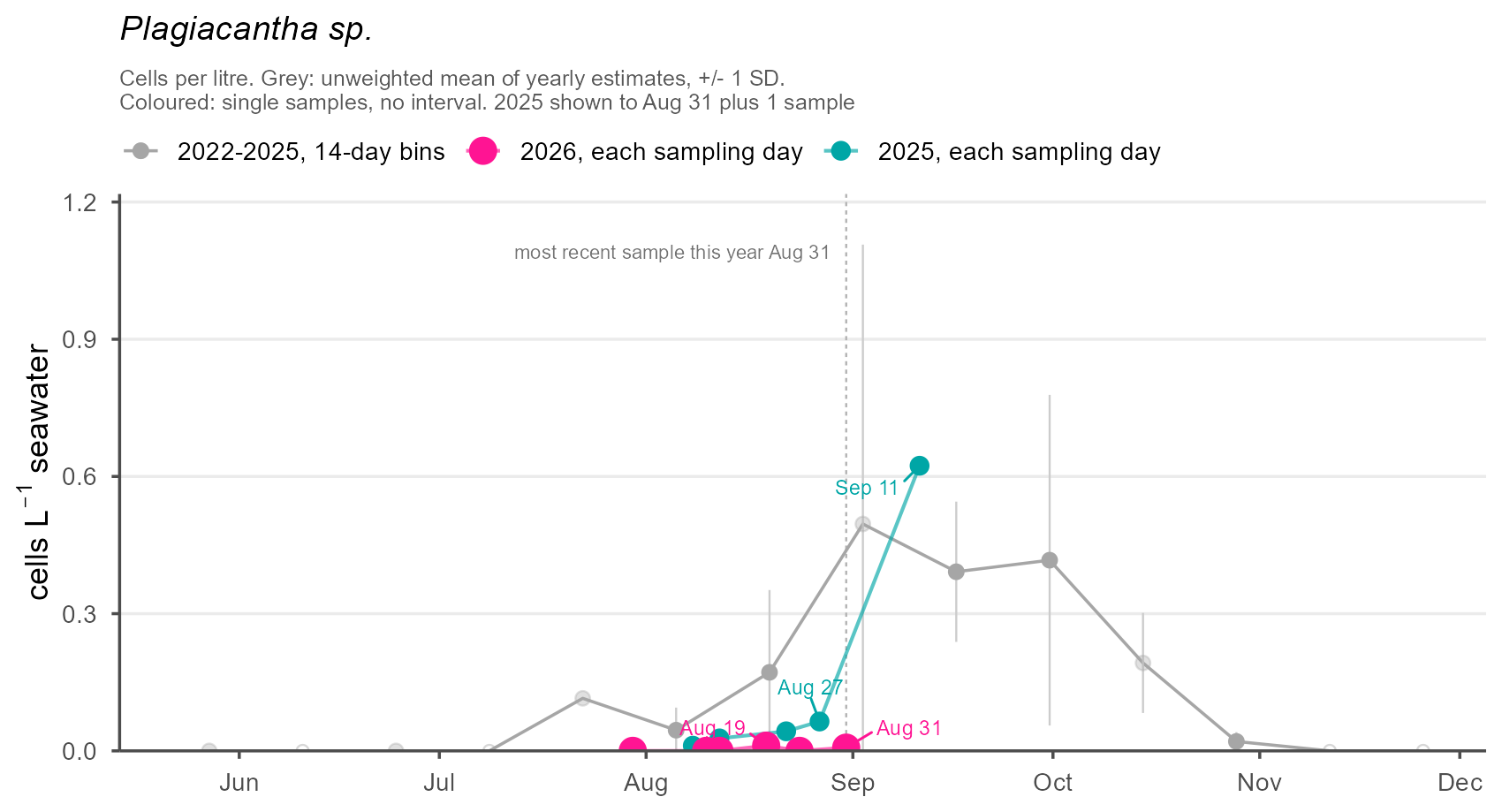
Last sampled October 16, 2026.
Average counts cover the period 2022 to 2025. The current season is plotted against it, with last year’s counts carried one sampling date further ahead, so the plot shows not only where the bloom is but what happened next the last time around.
Update, 16 September 2026
A sample from 100 m depth in the Gulf of Maine aboard the R/V Bowditch returned radiolarians in numbers sufficient for the next steps in the project. The dock bloom also looks like it may finally be picking up.
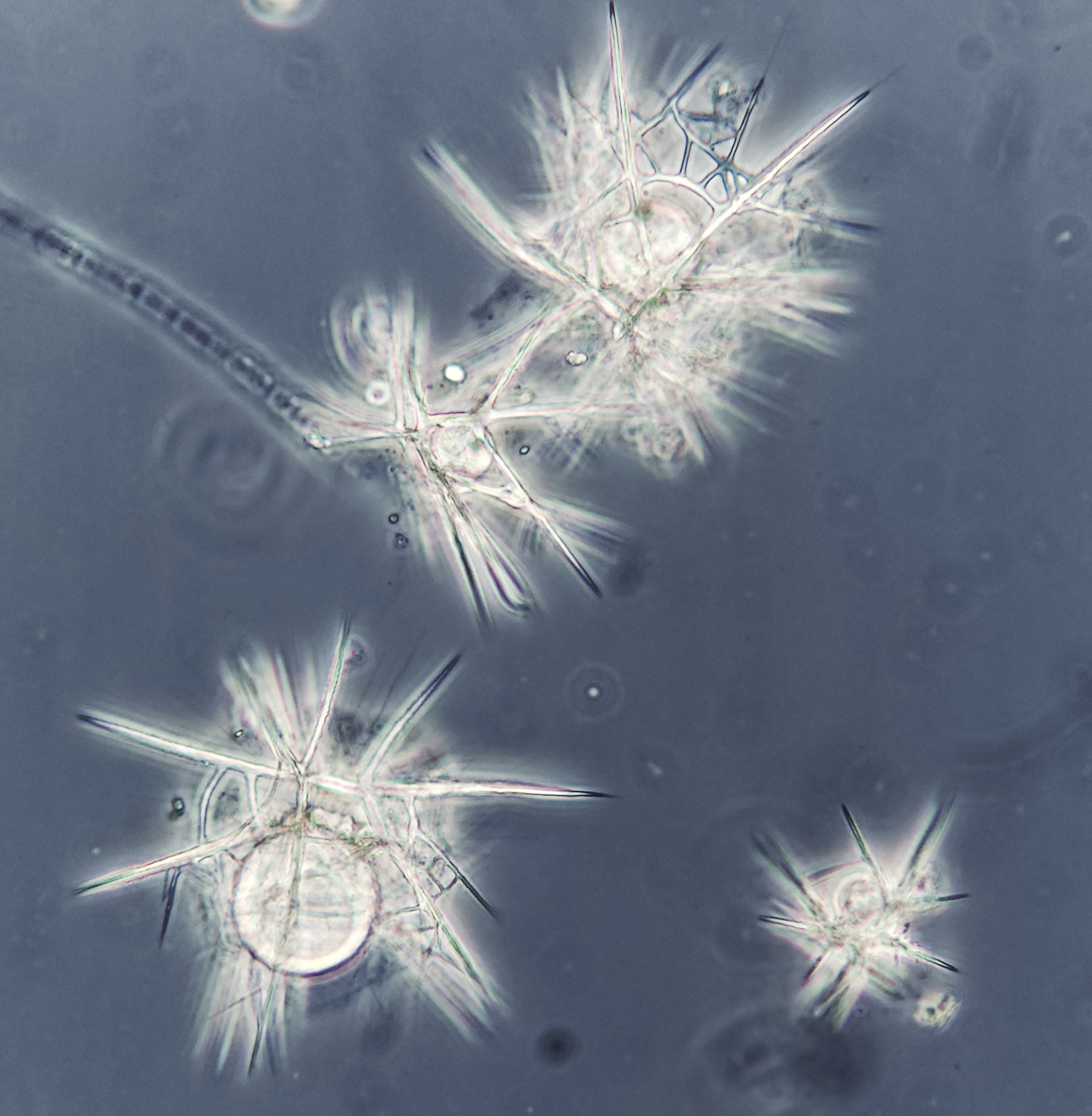
Finding cells offshore matters because the dock has been slow this year, and the deeper water is a second route to material when the bloom is late.
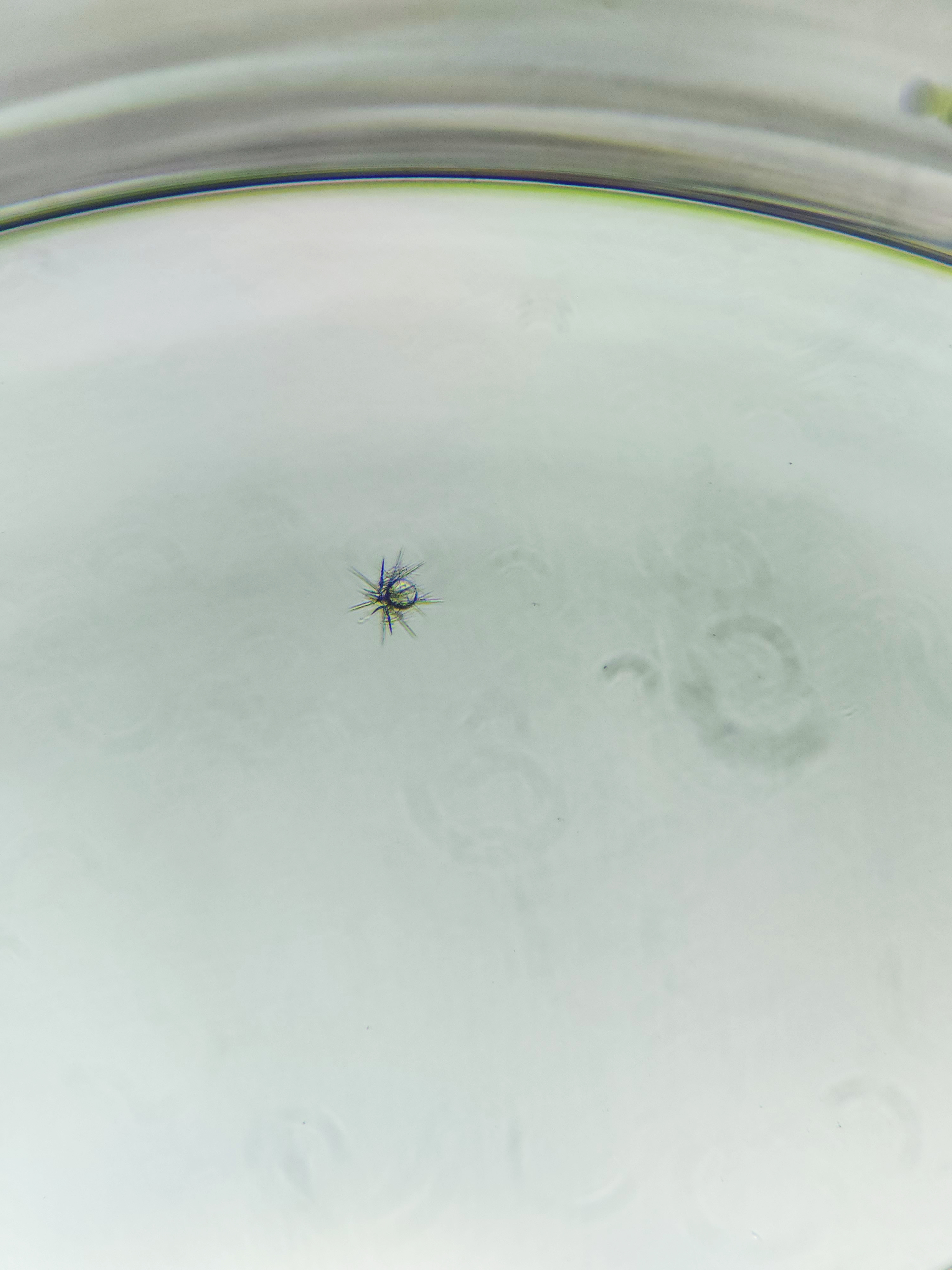
A single reproductive cell, isolated from the 100 m sample. Within 24 hours it released swarmers, the haploid cells the sequencing strategy runs on.
Update, 20 September 2026
A bloom of the harmful dinoflagellate Karenia mikimotoi is running in the Gulf of Maine this year, covering the area we sample. It is affecting shellfish in the region, and it may be connected to the low radiolarian counts at the Bigelow dock.
The last reported bloom of this species here was in 2017, outside our sampling window, so it does not appear in our counts and we have no direct comparison. The radiolarians may have moved deeper, which would keep them from reaching the dock on the tides, or they may simply not be growing in the shallows while the dinoflagellate is there.
At around 20 microns the dinoflagellate passes through our 30 micron net, so we cannot see the bloom in our own tows either.
We will continue monitoring at the dock and will increase sampling in deeper water to make sure we have access to cells for the genomics project.
Update, 16 October 2026
Visiting scientists passed through the lab over the past month and we made progress on genome sequencing. More on that later. The bloom at the dock is finally picking up now–later than I have ever observed it before. I will continue to monitor the bloom to track the peak and when it finally vanishes until next year.
How it works
The project runs as a community effort. Radiolarian researchers, particularly early career scientists, take part directly in specimen collection, sequencing, and analysis, so the foundational resources are built collectively.
Three strands run in parallel.
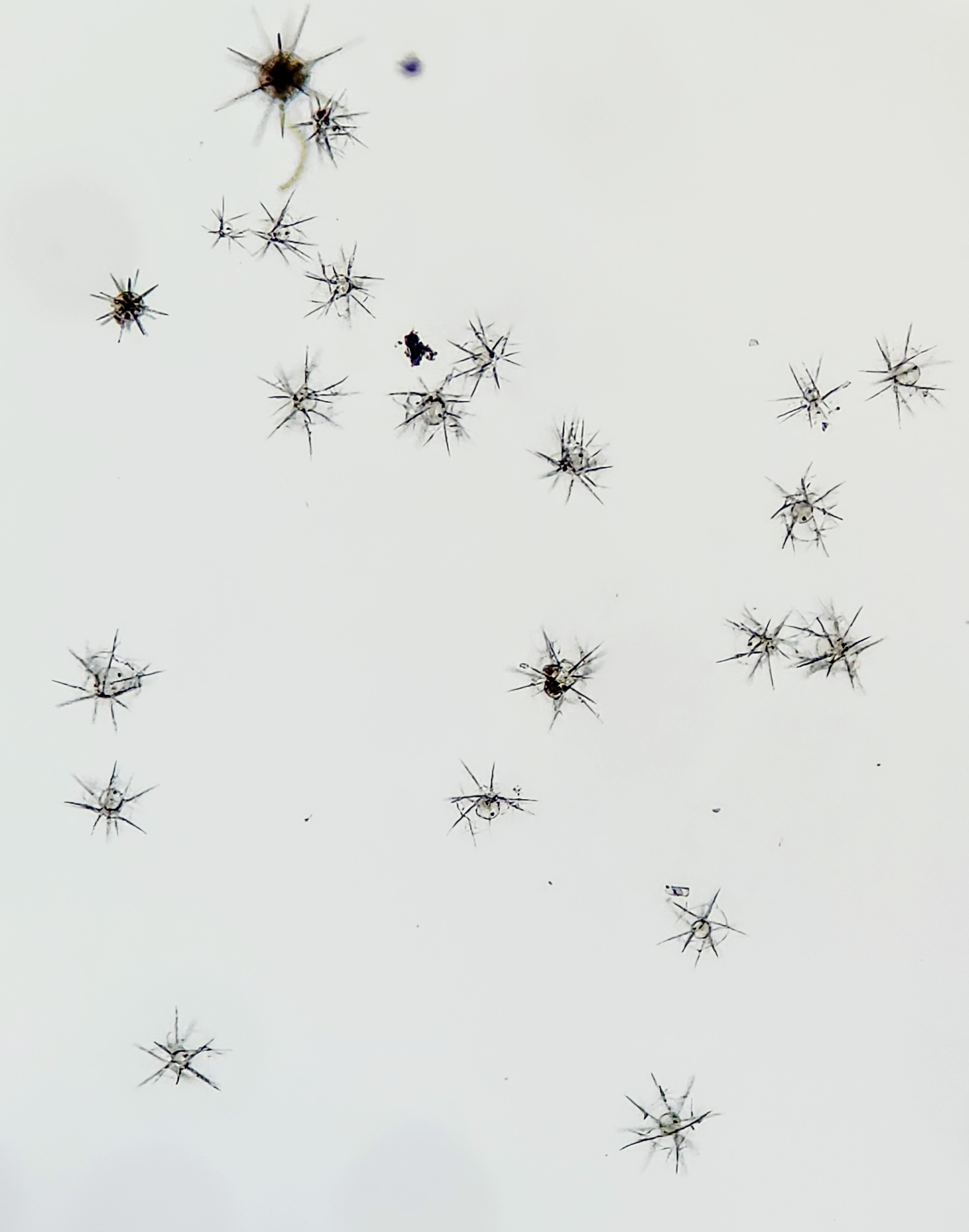
Sequencing. The fall bloom supplies material for single-cell whole genome sequencing. We generate hundreds of single-cell amplified genomes leveraging the life cycle of Plagiacantha. We will pair that with PacBio long reads from thousands of cells gathered in a community collection effort during the bloom, to scaffold the assembly. Co-assembling the two gives the reference genome, with annotation done together with participating researchers.
Molecular tools. Protocols for gene expression analysis and functional work, designed to run on field-collected specimens rather than laboratory cultures. That is what makes them portable: methods that do not require a culture can be adapted across radiolarian diversity. Culture attempts continue in parallel, but nothing depends on them succeeding.
Comparative sampling. Sequencing at other field sites, extending the same protocols to additional species, so the work reaches beyond one organism. Those sites and what turns up at them are on the radiolarian biology page.
Data, protocols, and genomic resources are released through established repositories as they are validated by the research community.
Data and protocols
Working data are shared among project participants:
Project data folder Participants only
If you are working on the project, or would like to, get in touch.
People
2026 sampling at Bigelow
- Anna Cho, Arizona State University
- Nicole Coots, University of British Columbia
- Miguel Méndez Sandín, Institut de Biologia Evolutiva, CSIC-UPF
- Natalia Llopis Monferrer, Monterey Bay Aquarium Research Institute
- Fabrice Not, Station Biologique de Roscoff
- Manu Prakash, Stanford University
- David Fields, Bigelow Laboratory for Ocean Sciences
Remote participants
- Leocadio Blanco-Bercial, Bermuda Institute of Ocean Sciences and Arizona State University
- Johana Rotterová, University of Puerto Rico Mayagüez
- Julia Van Etten, University of Maryland
- Jeremy Wideman, Arizona State University
The project grew out of a proposal to Life of Retaria, a group of early career researchers organizing the global community of people working on living retarians.
Support
Current support

This work is supported by The Hypothesis Fund.
Prior support
More on radiolarian biology.